Preaching Out of Season: A Homiletic for Those Who Dare to Take to the Pulpit during the Demise of Democracy (and Those Who Love Them), part 1, by David Albert Farmer
Paul to Timothy: Preach in season and out of season.

In honor of my courageous sister- and brother-preachers, with concern and love. —David Albert Farmer, Ph.D.
Paul to his primary protege:
Preach the word; stay ready in season and out of season.
Most of the time, as you’ve known at least since seminary days, Paul wrote to address matters of specific concern to a specific congregation. He had little interest in universalizing. Same with Seer John who visioned the book of Revelation (in Greek, titled: “An Unveiling”). In contrast, Jesus may have considered more possibilities for universalization of his teachings from the get-go.
We come to the above excerpt from what was eventually titled Second Timothy as grateful secondary beneficiaries, never able to comprehend with precision how equipped Timothy was to receive Paul’s pastoral messages; yet, much more experienced with faith communities (presumably) built upon the teachings of Jesus of Nazareth than Timothy, or for that matter Paul, had. There’s no excuse, then, for us to ponder his message passively.
When the above words from Paul were presented to me at my ordination in 1975, I was a 22 year old lacking in preaching experience (though I’d been dabbling at it since I was 14) but not without great enthusiasm and hope. The ending of the Vietnam War swirling in consciousness, I must say, having never heard a sermon challenging the evils of that or any war, I still had no real idea of what readiness to preach out of season meant or could mean; I assumed it alluded to the opposite of preaching when ministry was pleasant and preaching well-received. That wasn’t the half of it.
Now, fifty years of preaching later, I have a much better idea of what preaching out of season entails. Ultimately, Paul had in mind, though Timothy may not have put the pieces together the first time he read the scroll, preaching when the audacity to do so could cost the preacher dearly, maybe her or his life, literally. Paul knew what that was like; Timothy didn’t yet.
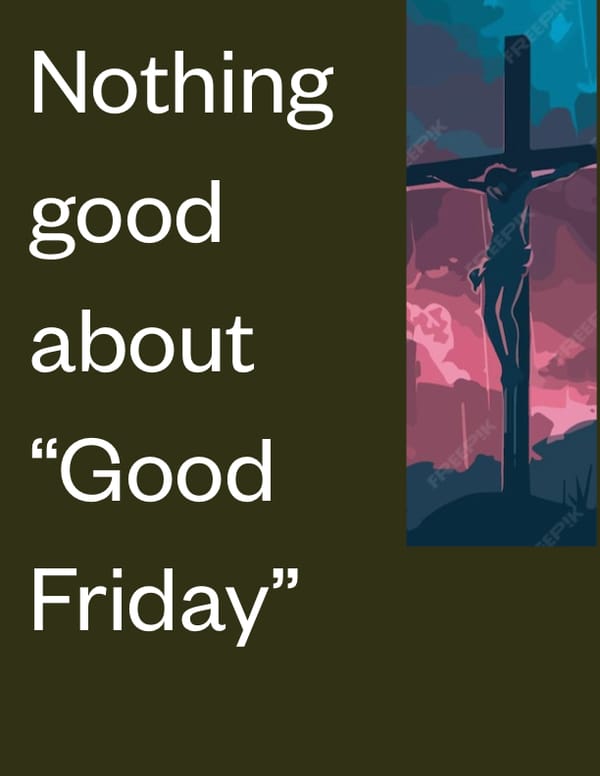
It is not possible to take up the cross to follow Jesus—as a preacher or politician or rank and file citizen without public position —and remain persistently unaware that the cross can never become anything other than an implement of execution however many people wear a replica as a pretty piece of jewelry. Truth-telling preachers are ostensibly more at risk than some other enemies of injustice.
I write this homiletical vision piece a few days after the sixty-first anniversary of Selma’s Bloody Sunday. How many preachers were in the crowd walking across the Edmund Pettus Bridge that day? More than a few! Some whose names we knew or came to know even at a distance and others whose names most of us never knew though they were no less essential than those recognizable. How many of those preachers had risked preaching against racism in their own pulpits just before and/or after the racist attacks by “law enforcement” on African American citizens and their Caucasian admirers and advocates? The lives of those preachers were on the line even if they were unscathed during the open attacks on them, and during the faux calm that prevailed for a bit. But evil has a relentless memory.
Herald the word. Stay good-time primed/bad-time primed. Convince/confront/console with unfailing patience and pertinence (2 Tim 4:2, translation mine)
I want to dig more deeply into Paul’s injunctions here, but I want to be sure no reader concludes that I am using this excerpt as a blueprint. In your pulpits, you must provide your hearers the same assurances, especially in light of the unfathomable abuses of both First and Second Testaments by limelighted MAGAt enemies of truth as well as sound hermeneutical principles. Any hints that literal interpretation is the lone method betray the essential character of what any scripture is or can be. This reality notwithstanding, there is every reason to continue to be challenged and thrilled by the various journeys demanded by interpretive processes.
Now to my translation of 2 Timothy 4:2 above and the applications I feel are crying to be embraced in these unsettling, yeah dangerous, times.
There are two key words in Koine Greek for “to preach”: euaggelizo—to message good news; and kerusso—to proclaim. The latter here was Paul’s choice of words as he dictated this message that would make its way to Timothy. The picturesque quality of many words in the common Greek vernacular makes intended messages especially rich. In the case of kerusso, the picture was of a herald, a town crier, getting essential messages—often life and death directives—out as urgently and as widely as possible.
The verb tense in 2 Timothy 4:2’s first word, keruxon, is aorist, which signifies punctiliar action (in contrast to present tense that suggests ongoing action); the action, once completed, is over and done with. This is not to suggest that preaching the sermon of a lifetime on one magic Friday evening or Sunday morning means the preacher has forever fulfilled her or his calling. Hardly!
Lest anyone consider such a nonsensical point of view, Paul follows immediately with instructions for the next message to be heralded. Once is not enough; the job, in fact, is never done. The herald finishes one sermon or announcement by immediately preparing for the next, which could come at any given second. Thus, Paul’s followup admonition: stay primed, remain on standby in the wings. The preacher never knows when divine urgency and/or dire circumstances will make a message or warning/instruction essential. Even if all seems well at the moment (a good time, eukairos), circumstances can spiral in the other direction almost instantly (a bad time, akairos).
Your keen eye may have already caught the word kairos (a pregnant or opportune moment in contast to a routine point in time, chronos) in both of these noun forms—one with the euprefix signaling good and one with the negativizing prefix a, bad. The fact that there is no conjunction between the two time extremes could suggest that Paul had continua in mind rather than either/or unrelated states of being. If the former, time would be conceived of as on a continuum with a bad season on one end and a good season on the other but with all time on the singular-temporal-reality continuum.
So we’ve received the mandate and pondered something of a preferred method; now to the message. Three words summarize what Paul regarded as essential content.
Convince Elegxon Persuasively present the facts. Appeal to a hearer’s intellect. It isn’t hard to imagine that Paul knew of Aristotle’s Rhetoric in which case this content would be the logosroot in the Aristotelian triad.
Confront Epitimeson Confront those ways of thinking that leave hearers reluctant or unwilling to stand for all that is right. Challenge behaviors identifying one as an enemy of God and goodness. Appeal to a hearer’s sense of ethical responsibility. Everyone who isn’t a sociopath has at least some measure of this. It’s the ethos dimension of the triad.
Console Parakaleson Console or comfort those who regret having made wrong choices or no choices. Encourage the ones who tremble, thinking they are not strong enough to do what the love of God requires of all the faithful. Pathos completes the triad.
More to come.